Infrastructure, Investment and Long-Term Growth: Why Côte d'Ivoire Matters
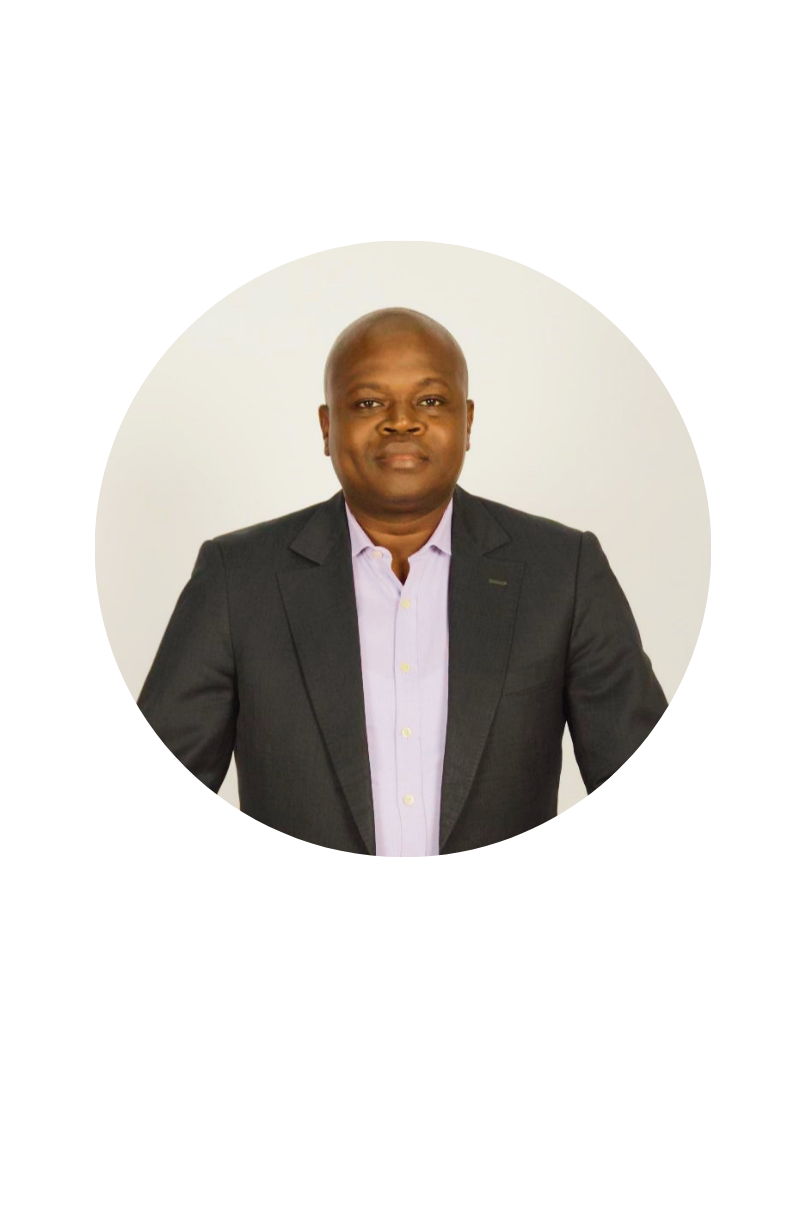
Abdoul Hien, Country General Manager, Mitrelli Côte d'Ivoire & Senegal
Infrastructure, Investment and Long-Term Growth: Why Côte d’Ivoire Matters
As one of West Africa’s fastest-growing economies, Côte d’Ivoire is strengthening its position as a regional hub for trade, industry, and investment. Infrastructure plays a central role in this transformation, by expanding essential services as well as improving competitiveness, attracting investment, and supporting long-term economic growth.
We spoke with our Country General Manager of Mitrelli Côte d’Ivoire, Abdoul Hien, about the country’s evolving infrastructure agenda, what investors are looking for today, and how Mitrelli approaches the delivery of infrastructure designed to create value long after construction is complete.
Question 1: Côte d’Ivoire has become one of Africa’s strongest economic performers. Beyond supporting public services, how is infrastructure strengthening the country’s competitiveness and positioning it as a regional hub?
Infrastructure today is a strategic driver of competitiveness.
One of the things that has impressed me most in Côte d’Ivoire is how clearly infrastructure is viewed as an economic growth strategy rather than simply a development priority. It is less about building assets and more about reducing the cost of doing business. The competitive advantage of infrastructure is increasingly measured by how efficiently businesses can move goods, access reliable services, and reach regional and international markets.
The country has positioned itself as one of West Africa’s leading logistics, industrial, and financial hubs. Investments in the Port of Abidjan, transport corridors connecting neighbouring countries, industrial zones, and reliable energy infrastructure are strengthening regional trade, supporting manufacturing and agro-processing, and making the country increasingly attractive for investment. They are also reinforcing Côte d’Ivoire’s role within regional value chains and positioning the country to benefit from deeper economic integration under the African Continental Free Trade Area (AfCFTA).
As the largest economy in WAEMU, representing approximately 40% of the union’s GDP, Côte d’Ivoire serves as a gateway to a regional market of more than 130 million people. Infrastructure enables businesses to move goods more efficiently, reduce costs, and access new markets.
At the same time, infrastructure remains fundamentally about people. Reliable access to water, healthcare, education, and energy creates the conditions for inclusive growth, ensuring that economic development translates into tangible improvements in people’s daily lives.
Question 2: Governments are investing heavily in infrastructure. How has the definition of success changed over the past decade?
Success is no longer measured simply by what gets built. Increasingly, it is measured by how infrastructure performs over time.
Today, governments, investors, and communities ask different questions. Does the infrastructure operate reliably? Is it maintained effectively? Does it improve access to services? Does it continue delivering value ten or twenty years after completion?
I see this change reflected in the conversations we have with our partners. The discussion is not centred on handing over an asset, it is about ensuring that the asset continues delivering value year after year.
Our Eau pour tous project in Côte d’Ivoire illustrates this evolution well. The project’s success is not defined by the kilometres of pipelines installed or the number of facilities delivered. It is measured by reliable access to safe drinking water for communities across the country. During a recent site visit, the Minister of Hydraulics, Sanitation and Salubrity emphasized precisely this point -that the project’s real value lies in the service it delivers to people every day.
At a time when governments face increasing fiscal constraints, ensuring infrastructure performs over its full lifecycle has become just as important as delivering it in the first place.
Question 3: Private investment is increasingly seen as essential for closing Africa’s infrastructure gap. What makes infrastructure projects attractive to long-term investors today?
Private capital today is looking for projects that are investable, not simply important. The difference lies in preparation, governance and bankability.
Private investors look for transparent procurement, balanced risk allocation, predictable regulatory frameworks, and realistic long-term operating models. Increasingly, projects are financed through blended structures that combine public investment with development finance, export credit agencies, commercial lenders, guarantees and political risk mitigation. Bringing these elements together early can significantly improve a project’s bankability and attract long-term capital.
From our experience, the strongest projects are those where all stakeholders share a common understanding of the long-term objective. Infrastructure succeeds when governments, financiers, contractors, operators, and local communities work toward the same outcome.
At Mitrelli, we have learned that in addition to technical expertise, successful infrastructure projects require trust, partnership, and alignment throughout the project’s lifecycle. When these elements come together, projects become more resilient, more attractive to investors, and ultimately more sustainable.
Question 4: Côte d’Ivoire continues to attract significant international investment. Beyond impressive growth figures, what gives you confidence in the country’s long-term outlook?
Every market faces risks, whether fiscal pressures, external shocks or global uncertainty. What gives investors confidence is not the absence of risk, but the strength of institutions and the consistency of long-term policy direction.
What gives me confidence is that Côte d’Ivoire is strengthening these fundamentals consistently. There is a clear long-term vision, a commitment to improving the investment environment, and a willingness to work with the private sector to accelerate development.
The country combines several strengths that distinguish it within the region: continued economic diversification, strengthening institutions, improving infrastructure and increasing private-sector participation.
The upcoming National Development Plan 2026–2030 reflects this long-term vision, with more than 70% of planned investment expected to come from the private sector. That demonstrates confidence in market-based development while recognising that public and private investment must work together.
These fundamentals position Côte d’Ivoire as one of West Africa’s most attractive investment destinations while strengthening its resilience in an increasingly complex global environment.
Question 5: Mitrelli has delivered more than 100 national-scale infrastructure projects across Africa. Based on that experience, what lessons are most relevant to Côte d’Ivoire as it enters its next phase of development?
One lesson stands out across every country where we operate: infrastructure creates the greatest impact when it is designed as part of a broader development ecosystem rather than as a standalone project.
At Mitrelli, we have learned that infrastructure should be designed around how it will operate—not simply how it will be built. Operational readiness, local capacity and long-term sustainability need to be considered from the earliest stages of project design.
In Côte d’Ivoire, this approach is reflected in the Établissements Sanitaires de Premier Contact (ESPCs), local primary healthcare facilities that are bringing essential medical services with 5 km radius to communities. Beyond delivering the infrastructure itself, our focus is on helping strengthen the healthcare system by ensuring these facilities are equipped, operational, and capable of serving communities for many years to come.
What I particularly value about working in Côte d’Ivoire is the strong alignment around long-term development objectives. When that alignment exists between government, partners, and communities, infrastructure becomes a catalyst for lasting economic and social progress.
Question 6: Looking ahead, what principle guides Mitrelli’s approach to ensuring infrastructure continues creating value long after construction is complete?
For us, construction is only one milestone in the lifecycle of a project.
The real measure of success is whether infrastructure continues operating efficiently, delivering reliable services, and generating economic and social value many years after completion.
That is why we integrate operational planning, maintenance, local capacity building, and knowledge transfer from the earliest stages of implementation. Sustainability is designed into every project from the beginning. Execution has also become a competitive advantage: governments increasingly expect partners who can move efficiently from concept to implementation while maintaining quality, governance and long-term operational performance.
Having worked on infrastructure projects across Africa, one thing becomes very clear: communities do not measure success by the day a project is inaugurated. They measure it by whether it is still delivering reliable services years later. That is the standard we set for ourselves.
Across the continent, the conversation is shifting from building infrastructure to ensuring infrastructure performs over time. Ultimately, communities do not measure infrastructure by the day it is inaugurated. They measure it by whether reliable water flows, electricity stays on, and healthcare services remain available years later. That is the standard we set for ourselves.