Angola is experiencing one of the most significant urban transitions in Africa. The country’s urban population has grown from approximately 30% in 1990 to more than 65% today, with Luanda among the fastest-growing cities on the continent. This transformation reflects a broader global dynamic: by 2050, Africa is expected to account for nearly 25% of worldwide urban population growth, according to the United Nations. Urbanization at this scale requires structured, scalable, and coordinated solutions.
Rapid population growth and rural-to-urban migration have intensified pressure on housing and public services. Addressing this demand is not only a social priority but a strategic development imperative. Integrated urban communities, when properly planned, shape productivity, stability, and inclusive economic growth.
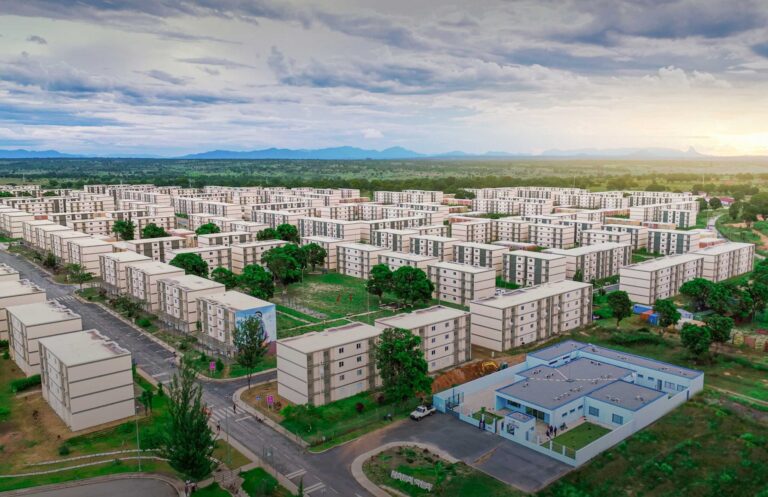
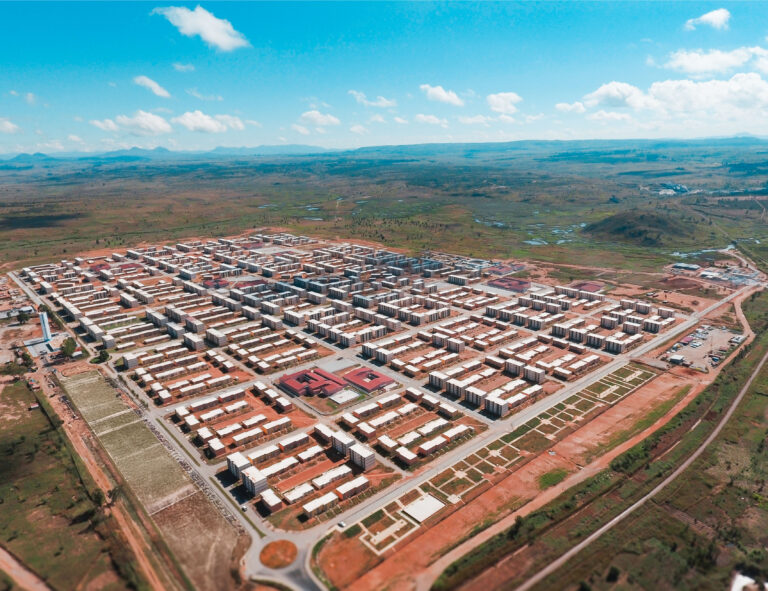
Mitrelli’s centralities were developed within this framework. Designed as complete urban ecosystems rather than standalone housing projects, they combine residential units with education, healthcare, and social infrastructure. Crucially, effective solutions at scale are designed around local demography, geography, and socioeconomic context, ensuring that each development responds to the specific needs, density patterns, and economic realities of its location.
Beyond construction, structured social accompaniment programs supported residents’ transition into organized urban environments, reinforcing social cohesion and long-term sustainability.
Grounded in the principles of human capital development, each centrality integrates schools, childcare centers, healthcare facilities, and recreational spaces within a coordinated urban plan. This approach ensures direct access to essential services while reinforcing the foundations for long-term economic participation.
Educational facilities – from primary schools to polytechnic institutes – are built to meet high standards and support skills development aligned with evolving economic needs. Healthcare centers are fully equipped and strategically located to provide accessible, community-based care. Together, these components strengthen workforce readiness and public health resilience.
Integrated housing at this scale is both social and economic infrastructure. By aligning residential development with education, healthcare, and community services, centralities strengthen workforce participation, improve public service efficiency, and enhance long-term national competitiveness.
As Angola continues to urbanize, integrated urbanization offers a replicable model: one that aligns housing delivery with human capital investment and local realities, and that positions structured communities as engines of sustainable growth.
In rapidly urbanizing economies, scale succeeds when it is systematic, coordinated and context-driven.